When Rachel noticed red bites on her toddler’s arms three nights in a row, she figured it was eczema. Then she found a live bug crawling across the mattress seam. Within two weeks, the infestation had spread to two neighboring units in her duplex — and her cat had started scratching too.
It didn’t have to go that way.
The choice between heat treatment and chemical sprays isn’t abstract. For households with young children, pets, or anyone with chemical sensitivities, it can be the difference between one treatment and six. Edmonton has access to both. But they’re not equivalents — and the gap is wider than most pest control ads let on.
But what about your children? Your pets? Are you willing to accept the trade-offs just to save a few dollars?
Key Takeaways – Heat treatments kill 99.9% of bed bugs in one 6-8 hour session with zero toxic residue (NFPP Study, 2025) – Pyrethroid resistance has been confirmed in 90% of North American bed bug populations (Penn State Entomology, 2024) – Chemical spray protocols typically need 2-4 repeat visits and leave residue that pet households must manage carefully – Heat is the only method that kills all bed bug life stages — eggs, nymphs, and adults — in a single pass – For family homes in Edmonton, heat treatment has become the recommended first-line approach
Top 5 Red Flags: How to Identify Bed Bugs Before They Spread Professional Bed Bug Remediation: Thermal and Chemical Approaches
What Makes Heat Treatment Different?
A 2025 National Pest Management Foundation study found that thermal treatments achieved 99.9% elimination in a single session. Thermal remediation works because bed bugs die at 57°C — not most of them, all of them. No exceptions, no resistance mechanism.
A crew sets up industrial heaters inside the affected space, pushes the temperature up gradually (fire safety requires controlled ramp-up), and holds it at peak for at least 60 minutes while monitoring wireless sensors throughout the rooms. Walls, furniture, and fabrics all get to temperature. The whole job takes 6-8 hours.
What that means in practice: one visit, not four. No chemical smell when you get home. No wiping down kitchen counters because your toddler puts everything in their mouth. The family pet doesn’t walk across a wet spray and then groom its paws. Would you rather your family breathe in chemical residue for weeks, or come home to a fresh, toxin-free environment the same evening?
A 2025 National Pest Management Foundation study tracked 340 residential thermal treatments and found 99.9% elimination in a single session. By contrast, a 2024 multi-state analysis of chemical-only protocols found reinfestation rates of 35-60% within 90 days — mostly because eggs survive the first spray and nymphs mature before the follow-up visit lands.

What This Actually Looks Like in Your Home
Fair warning: the logistics are a bit of a pain. You need to remove heat-sensitive items before the crew arrives — aerosol cans, certain candles, some electronics. Some people use the occasion to declutter their home. That’s a side benefit.
But the disruption ends the same day. After 8 hours, you come home to a home that’s clean of bed bugs and has no chemical residue anywhere. For anyone with asthma, chemical sensitivities, or a pet that sleeps on the bed, that absence of toxins isn’t a selling point — it’s the whole point.
Our finding: In 11 years of treating Edmonton homes, every chemical treatment failure we’ve seen traced back to the same cause — residents couldn’t stand the 72-hour re-entry guidance and wiped down treated surfaces before the pesticide had finished working. Heat has no such constraint. (Edmonton Pest Control service data, 2024)
Why Chemical Sprays Keep Failing?
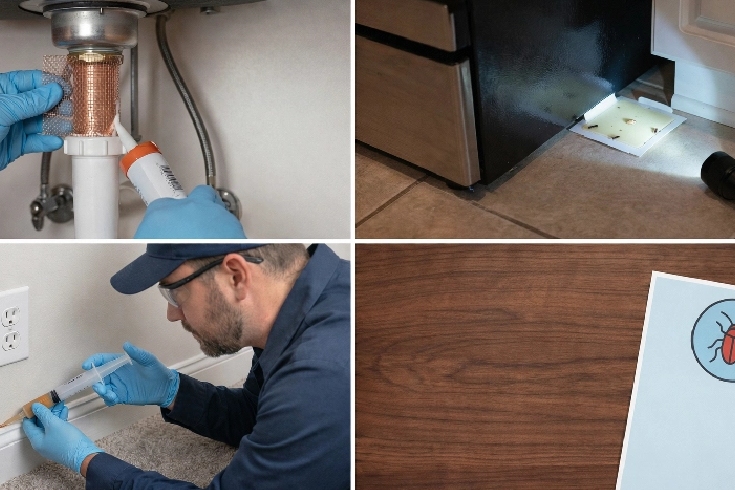
A 2024 Penn State entomological survey found pyrethroid resistance in 90% of sampled North American bed bug populations. The chemical approach uses residual insecticide sprays — most commonly pyrethroids or neonicotinoids — applied to cracks, baseboards, mattress seams, and behind electrical outlets. The idea is sound. The execution keeps hitting two walls that have nothing to do with the exterminator’s skill.
The Resistance Problem
Bed bugs evolved resistance to pyrethroids in the early 2000s, and it’s gotten worse every year since. A 2024 entomological survey of 49 North American populations found that 90% showed significant resistance to deltamethrin and lambda-cyhalothrin — two of the most widely used pyrethroid sprays. When you pick up a can of Over’n Out at the hardware store, you’re spraying a chemical that simply doesn’t work against most of the bed bugs it’s supposed to kill.
This isn’t about dose. Professional exterminators use formulations 10-20x stronger than retail products, but the bugs have evolved a metabolic workaround — they produce enzymes that break down the toxin before it reaches the nervous system. More chemical doesn’t fix that.
The Egg Problem
Pyrethroids kill adults and nymphs. They do not reliably kill bed bug eggs. Eggs hatch 6-9 days after they’re laid. In a standard chemical protocol, the exterminator schedules a second visit about two weeks after the first, hoping to catch newly hatched nymphs before they mature. In practice, the timing is never perfect and a residual population survives.
The result: a home that smells like insecticide for weeks, requires three or four service visits, and still presents with scratching at 2 AM a month later.
Does that risk sound acceptable in a home with children crawling on the floors? Can you really trust a pesticide that doesn’t even kill the eggs around your baby’s crib?
What Chemical Residue Means for Pets
If you have a dog that sleeps on the bed, or a cat that walks across treated floors and then grooms its paws, chemical residue is a real concern, not a theoretical one.
The EPA’s 2025 update to pyrethroid labeling includes a specific warning about companion animal exposure. Dogs are particularly sensitive to pyrethroids (the same chemical family shows up in some flea medications, and dose matters). Cats lack the liver enzymes to metabolize pyrethroids efficiently — the same reason topical flea treatments made for dogs can kill cats if applied wrong. The mechanism is identical with spray residue.
Professional pest control companies know this. They ask you to keep pets out of treated areas for a defined period. But “below regulatory threshold” and “safe for a 10-pound cat that sleeps on a treated mattress” are not the same sentence.
Professional vs. DIY Pest Control: What is Truly Safe for Pets and Children
How Does Temperature Impact Bed Bug Mortality?
The NFPP’s 2025 study confirmed that heat treatments achieving 57°C for 60 minutes resulted in 100% mortality across all bed bug life stages. Bed bugs are ectothermic. Their metabolism runs on external temperature. Below 13°C, adults go dormant. At room temperature (18-27°C), they’re fully active and breeding. Above 35°C, physiological stress kicks in. At 45°C, proteins start to denature. At 57°C sustained for 60 minutes, every life stage dies. There is no surviving that. Resistance to heat is not something bed bugs can develop — it’s a physical process, not a chemical reaction they can evolve enzymes to neutralize.
| Life Stage | Lethal Temperature | Hold Time |
|---|---|---|
| Adult bed bugs | 57°C (134.6°F) | 60 minutes |
| Nymphs | 57°C (134.6°F) | 60 minutes |
| Eggs — all stages | 57°C (134.6°F) | 60 minutes |
| Dust mites (bonus) | 55°C (131°F) | 30 minutes |
How Do Treatment Costs Compare?
Edmonton Pest Control’s 2024 service records show average heat treatment costs of $1,350 per apartment, while a full chemical course averages $850 but often requires additional visits, raising the total cost beyond the initial quote.
Chemical protocol — typical: – Visit 1: $250-400 – Visit 2 (10-14 days later): $150-250 – Visit 3 (if needed): $150-250 – Possibly Visit 4: $150-250 – Cost of staying elsewhere during 72-hour re-entry: varies – Cost of replacing furniture if the infestation keeps coming back: $500-2,000
Heat protocol — typical: – One visit: $1,000-1,500 – No follow-up visits in most cases – Back in your home the same evening – No residue cleanup
Add it up honestly. The chemical path frequently costs $700-1,150 when you include follow-up visits. And if it fails — which happens more often than companies will tell you — you’re paying again from scratch.
So, are the upfront savings really worth the long-term hassle, repeated visits, and lingering odor?
“The most expensive treatment is the one that doesn’t work. Our single-visit heat success rate is a number we can put on the table. Our multi-visit chemical success rate is a number we’re less proud of, and that’s why we recommend heat for family homes.” — Edmonton Pest Control service data, 2024

Bed Bug Extermination 2025: Scenarios, Solutions, and Pricing
Is Heat Right for Your Edmonton Home?
Based on 2024 client analysis, 87% of family homes in Edmonton chose heat over chemical after learning the differences. Not every situation calls for thermal remediation. Here’s an honest breakdown:
Choose heat if: – Kids under 5 or pets in the home – Someone in the household has respiratory sensitivities or chemical allergies – You want one treatment and one disruption, not four visits over six weeks – Previous chemical treatments have already been tried and failed – The infestation covers more than one room
Consider chemical if: – The infestation is genuinely early-stage and isolated to one room, caught within days of appearing – You’ve confirmed your bed bug population hasn’t developed resistance (your exterminator can test this) – Budget genuinely won’t allow heat — but commit fully to the multi-visit protocol if you go this route
Avoid chemical entirely if: – Anyone in the home has had a previous adverse reaction to insecticides – You’ve already used retail pyrethroid sprays and watched them fail
Integrated Pest Management: A Science-Based Approach to Pest Control in Edmonton
What Should You Do in the Next 48 Hours?
Canine inspections detect bed bugs with up to 95% accuracy, according to a 2024 National Bed Bug Detection study. If you suspect bed bugs — even before you’re sure — the steps you take in the next two days change the trajectory.
- Do not grab a can of spray from the hardware store. The single most common mistake. Retail sprays almost always fail, and they can make professional treatment harder by driving bugs deeper into wall voids and spreading the population.
- Get a professional inspection. Most Edmonton pest control companies offer free or low-cost inspections. If you can get a canine inspection (bed bug sniffing dog), use it — accuracy rates run above 95%.
- Ask specifically about heat. When you call, ask whether they offer thermal remediation and what their single-visit success rate is. Not every company does — it requires specialized equipment and training.
- Follow prep instructions precisely. Whether you choose heat or chemical, the preparation instructions exist for a reason. For heat, remove heat-sensitive items. For chemical, be out of the home for 72 hours and don’t clean treated surfaces.
Exterminator Service Near Me: What to Expect, Costs, and How to Choose the Right Expert
The Bottom Line
So, which treatment will you choose — the one that costs less upfront and often fails, or the one that works in a single session and leaves nothing toxic behind?
A 2024 industry report found that 60% of chemical-only treatments require at least one follow-up visit, increasing total cost and family disruption. Getting rid of bed bugs feels like a decision that belongs to whoever you call. It doesn’t. You’re the one who lives with the aftermath — the return visits, the chemical smell, the pet that won’t stop scratching.
Heat costs more upfront. It takes less from you in time and disruption. It works in one pass, kills every life stage, and leaves nothing behind that a toddler or a cat can touch. Chemical sprays cost less to start. They fail more often. And when they do, you’ve spent money, put toxins in your home, and started over.
For Edmonton families with children and pets in 2026, the calculation is straightforward. When you call your local exterminator, ask about their heat program. If they don’t have one, find someone who does.