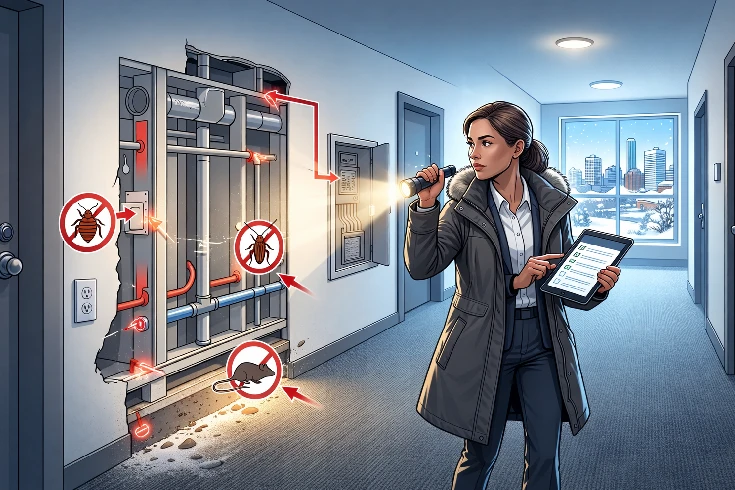
Managing a multi-unit building in Edmonton means managing shared risks. In a detached house, a pest problem is isolated to one family. In a high-density apartment complex or condominium, a single unit with a sanitation issue or a hitchhiking bed bug can rapidly escalate into a building-wide crisis. Shared walls, utility chases, and plumbing lines act as superhighways for pests, allowing them to bypass locked doors and move freely between floors.
Edmonton’s climate adds another layer of complexity. Our harsh winters drive rodents indoors in search of warmth, while our humid summers create ideal breeding conditions for insects. For property managers, relying on reactive measures—calling an exterminator only after a tenant complains—is a failing strategy. It leads to higher costs, frustrated residents, and potential legal exposure.
Effective Edmonton apartment pest control requires a fundamental shift in operations. You need to move from putting out fires to fireproofing the building. This means adopting proactive prevention, structural fortification, and fostering community cooperation.
Why Multi-Unit Residential Pest Prevention in Edmonton is Critical
Ignoring the early signs of pest activity is rarely a money-saving move. The costs associated with an entrenched infestation far outweigh the expense of routine monitoring.
Financial Impact
The financial bleeding starts with treatment costs, but it rarely ends there. Reactive treatments often require multiple visits because the infestation has had time to establish a foothold. Beyond the invoice from the pest control provider, you face vacancy losses. A building known for pests has higher turnover and longer vacancy periods. In severe cases, tenants may apply to the Residential Tenancy Dispute Resolution Service (RTDRS) for rent abatements, arguing that the landlord failed to provide a habitable premise.
Reputation Management
In the age of local community groups and online review platforms, news travels fast. A few mentions of cockroaches or bed bugs on Google Reviews or local Reddit threads can dismantle a building’s reputation. Edmonton condo building pest management is as much about protecting the asset’s brand as it is about sanitation. Once a building is tagged as “infested” online, attracting quality tenants becomes significantly more difficult, forcing managers to lower rents to fill units.
Legal & Health Implications
Under the Alberta Minimum Housing and Health Standards, landlords are legally obligated to ensure rental premises are free of pest infestations. Failure to act swiftly and effectively is not just bad business; it’s a violation of provincial health standards. If a tenant reports a pest issue to Alberta Health Services and an inspection reveals negligence, the property owner can face enforcement orders and fines.
Identifying Common Offenders: Top Pests in Edmonton Apartments and Condos
While Edmonton is home to various pests, property managers usually face the “Big Three.” These specific pests thrive in multi-unit environments and require distinct control strategies.
Preventing Bed Bugs in Edmonton Rentals: A Community Effort
Bed bugs are the nightmare scenario for multi-unit housing. They do not discriminate based on cleanliness; they are hitchhikers that arrive on luggage, used furniture, and clothing.
The primary challenge with bed bugs is their mobility. Once established in one unit, they will migrate to adjacent units through electrical outlets and baseboards. This necessitates the “Cube Method” of treatment. If Unit 202 has bed bugs, a professional must also inspect and potentially treat the units above (302), below (102), and on either side (201 and 203). Treating a single unit in isolation is rarely effective, as the pests simply flee the chemicals and return later.
Cockroach Control in Edmonton Apartments: Stopping the Spread
The German Cockroach is the most prevalent species in Edmonton’s high-density buildings. Unlike larger species, German cockroaches are small, reproduce rapidly, and prefer the warm, humid environments found in kitchens and bathrooms.
These pests are heavily linked to sanitation, but they also rely on building infrastructure. They move along plumbing lines and heating ducts. If a tenant has a heavy infestation, the roaches will inevitably push outward into hallways and neighboring apartments. Effective control involves locating the specific harborage areas—usually behind refrigerators or inside dishwasher motors—and applying targeted treatments rather than general fogging.
Preventing Rodent Outbreaks in Edmonton Buildings: Mice and Voles
Rodent pressure in Edmonton is seasonal. As the temperature drops in late autumn, mice and voles aggressively seek entry points.
In older walk-up apartments, rodents often enter through foundation cracks or gaps around gas lines. In newer construction, they may exploit gaps in the building envelope or enter through underground parkades. Once inside, mice can travel vertically through wall voids, reaching upper floors with surprising ease. They damage insulation, chew through electrical wiring (posing a fire risk), and contaminate surfaces with urine and feces.
Implementing Integrated Pest Management (IPM) in Edmonton Residential Buildings
The industry standard for effective control is Integrated Pest Management (IPM). This approach moves beyond the outdated “spray and pray” method. Instead of relying solely on chemical application, integrated pest management Edmonton residential services use a combination of techniques to manage pest populations safely and sustainably.
The 4 Steps of IPM
- Inspection: This is the most critical step. Technicians do not just look for pests; they look for the root cause. Is there a water leak attracting roaches? Is there a gap under the loading dock door admitting mice?
- Identification: Correctly identifying the species is vital. The treatment for a Norway Rat differs from that of a House Mouse, just as the protocol for Pharaoh Ants differs entirely from Carpenter Ants.
- Treatment: IPM prioritizes mechanical and physical controls first (traps, vacuuming, sealing). Chemical controls are used judiciously and targeted specifically to the pest, reducing the volume of pesticides introduced into the living environment.
- Monitoring: Pest control is a process, not an event. ongoing surveillance using glue boards and bait stations ensures that new populations are caught before they explode.
Comparison: Reactive Spraying vs. IPM
| Feature | Traditional Reactive Spraying | Integrated Pest Management (IPM) |
|---|---|---|
| Trigger | Tenant complaint | Routine schedule & risk assessment |
| Method | Heavy chemical application | Inspection, exclusion, targeted baiting |
| Goal | Kill visible pests | Eliminate the source & prevent return |
| Safety | Higher risk of exposure | Lower risk (safer for pets/kids) |
| Long-term Cost | High (recurring outbreaks) | Low (preventative maintenance) |
Edmonton Condo Building Pest Management: Structural Defense Strategies
Your building is the first line of defense. Physical exclusion is often more effective than chemical treatment because it physically stops pests from entering or moving between units.
Exclusion Techniques
Property managers should conduct annual audits of the building envelope. Focus on sealing cracks in the foundation and ensuring that all utility penetrations (where pipes or wires enter the building) are sealed with rodent-resistant materials like steel wool and caulking. Internally, the focus must be on vertical migration. Sealing gaps around plumbing pipes where they enter the floor or ceiling prevents pests from using these chases as ladders between apartments. Installing high-quality door sweeps on all exterior doors—and ensuring they sit flush against the threshold—is a simple, low-cost way to block mice and insects.
Waste Management
Garbage areas are the primary attractant for pests. If your building uses chutes, they must be cleaned and deodorized professionally on a regular basis to remove the organic buildup that attracts roaches. Dumpster areas should be situated away from building entires, kept on concrete pads, and have tight-fitting lids. Overflowing dumpsters are an open invitation to Edmonton’s rodent population.
Common Areas
Shared spaces are high-traffic zones for pests. Laundry rooms, with their high humidity and heat, attract cockroaches. Gyms and locker rooms can harbor pests in lockers or equipment. Lobbies are entry points. Routine monitoring devices should be placed discreetly in these areas to act as an early warning system.
Edmonton Property Manager Pest Prevention Tips: Tenant Education and Cooperation
You cannot control pests without the cooperation of your residents. However, a combative relationship often leads to hidden infestations.
The Communication Gap
Tenants often hide pest problems because they fear eviction, bill-backs for treatment costs, or social embarrassment. This silence allows a manageable issue in one unit to fester into a building-wide infestation. Managers must foster an environment where reporting is encouraged.
Lease Addendums
Lease agreements should clearly outline the tenant’s responsibility to maintain sanitary conditions and, crucially, the requirement to report pests immediately. While you cannot usually evict solely for pests, you can enforce lease terms regarding sanitation and cooperation with pest control professionals.
Educational Materials
Provide new tenants with a “Pest Awareness” welcome package. This should include:
- How to check for bed bugs when traveling or buying used furniture.
- Proper food storage techniques (using sealed containers).
- Instructions on how to use the building’s waste disposal systems correctly.
- [Insert Internal Link to a downloadable Tenant Pest Checklist or similar resource]*
The Importance of Routine Edmonton Multi-Family Housing Pest Inspection
Waiting for a tenant to call is waiting too long. Routine inspections are the backbone of a pest-free building.
Proactive Sweeps
Quarterly or bi-annual inspections of all units allow you to catch issues early. For bed bugs, consider utilizing canine detection services. Bed bug dogs can sniff out live bugs and viable eggs with high accuracy, identifying infestations behind walls that a visual inspection might miss.
Unit Turnover Protocol
The best time to inspect and treat a unit is when it is empty. Implement a strict policy: no new tenant moves in until the unit has been cleared by a pest control professional. This includes checking behind appliances, inspecting baseboards, and ensuring no pests were left behind by the previous resident.
Documentation
Keep a centralized logbook of all pest sightings and treatments. Over time, this data will reveal patterns. If you notice a cluster of mouse sightings in the northeast corner of the parkade every November, you know exactly where to focus your exclusion efforts before the next winter.
Selecting the Right Pest Control Services for Edmonton Landlords
Not all exterminators are equipped to handle large-scale residential complexes. The strategies used for a suburban bungalow do not scale up to a 100-unit high-rise.
Licensing and Insurance
Ensure your provider is fully licensed in Alberta and carries appropriate liability insurance. They should be well-versed in AHS standards and able to provide the documentation required for health inspections.
Experience with Density
Look for a provider specializing in Edmonton multi-unit residential pest prevention. They understand the dynamics of airflow, utility chases, and tenant relations. They will know how to communicate with tenants respectfully while getting the job done efficiently.
Response Time & Discretion
In property management, speed is essential. You need a partner who can respond to urgent calls within 24-48 hours. Furthermore, discretion matters. Unmarked trucks and technicians who are discreet help maintain the building’s professional image and prevent panic among residents.
- [Insert Internal Link to Contact Page/Request a Quote]*
Summary and Next Steps
Pest control services for Edmonton landlords should be viewed as an investment in asset protection, not merely an operational expense. By implementing Integrated Pest Management, reinforcing the building structure, and educating tenants, you protect your property’s value and your reputation.
Do not wait for the temperature to drop or for a review to pop up online. Schedule a building-wide assessment today to identify vulnerabilities before they become outbreaks.
Frequently Asked Questions
For multi-unit buildings, quarterly preventative services for common areas (laundry, mechanical rooms, lobbies) are standard. However, we strongly recommend a full inspection of any unit immediately upon turnover. Catching an issue while the unit is vacant is significantly cheaper and easier than treating it after a new tenant moves in.
Generally, the landlord is responsible for ensuring the property meets Minimum Housing and Health Standards, which includes being pest-free. Landlords usually cover the cost of treatment to ensure it is done correctly. However, if a landlord can prove a tenant’s negligence caused the infestation (e.g., hoarding or extreme sanitation issues), they may pursue the tenant for costs, though this can be difficult to enforce without strong documentation.
We avoid "bug bombs" or foggers, as these often irritate roaches and push them deeper into walls or neighboring units. The most effective method involves Integrated Pest Management (IPM): using gel baits and Insect Growth Regulators (IGRs) that disrupt the reproduction cycle, combined with aggressive sanitation and sealing of cracks where roaches hide.
The best approach is a "no-penalty" reporting policy. Make it clear to tenants that they will not be evicted or fined for reporting a pest issue. Educate them that early detection means the treatment will be less invasive (no major preparation required) compared to treating a full-blown infestation.
Yes. Through our IPM approach, we prioritize mechanical traps, exclusion (sealing holes), and sanitation advice before resorting to chemicals. When products are necessary, we select low-toxicity options designed to target the specific pest while minimizing risk to residents and pets.