Edmonton’s environmental conditions create a predictable cycle for local wildlife and insects. The extreme shift from harsh, sub-zero winters to humid, brief summers dictates the movement of pests. When the deep freeze of an Alberta winter sets in, rodents move inward, seeking the stable temperatures of residential and commercial foundations. Conversely, as the ground thaws, a different set of biological pressures drives insects toward structures in search of moisture and nesting sites.
Managing these seasonal shifts is a fundamental aspect of property maintenance in the capital region. Neglecting early warning signs often results in more than just a minor nuisance; it leads to compromised building envelopes, damaged electrical systems, and significant sanitation risks. Understanding the specific biology of Edmonton’s most common pests is the first step in implementing a functional prevention strategy.
The Economic and Structural Reality of Pest Infestations
In a professional context, pest management is an exercise in risk mitigation. Pests represent a direct threat to the valuation and safety of a property. Rodents, for instance, are responsible for a measurable percentage of “unknown cause” structure fires due to their tendency to gnaw on polymer-coated wiring. Insects like carpenter ants can compromise the load-bearing integrity of wooden frames if left to colonize for multiple seasons.
A proactive approach relies on the principles of Integrated Pest Management (IPM). This involves analyzing the environment, identifying the specific species, and applying a combination of physical exclusions and targeted treatments. By focusing on the root cause—such as a gap in the masonry or a moisture leak—property owners can avoid the cycle of repetitive, ineffective chemical applications.
Common Edmonton Pests and Their Active Seasons
| Pest Type | Peak Active Season | Primary Attractant | Risk Profile |
|---|---|---|---|
| Mice | October – March | Thermal gradients, food waste | High (Wiring damage, hantavirus, nesting in insulation) |
| Ants | May – August | Aphid honeydew, sugar, damp wood | Moderate (Structural excavation, food contamination) |
| Bed Bugs | Year-round | CO2 and heat (Human hosts) | High (Rapid spread, liability, psychological distress) |
| Cockroaches | Year-round | Humidity, grease, decaying matter | High (Asthma triggers, pathogen transmission) |
| Wasps | July – September | Proteins, fermented fruit, nectar | High (Aggressive defense, anaphylactic risk) |
1. Mice: The Persistent Winter Pressure
In Edmonton, the House Mouse and the Deer Mouse are the primary rodents of concern. As temperatures drop below -10°C, these animals utilize their highly developed thermoreceptors to find heat leaks around door frames, utility penetrations, and vents. A mouse requires a gap no larger than 6mm—roughly the width of a pencil—to gain entry.
Once inside, the damage is often hidden. They prefer the safety of wall voids and attic insulation, where they can nest and reproduce without immediate detection. A single breeding pair can lead to an exponential population increase within 4 to 6 months. Their urine contains pheromones that signal to other rodents that the building is a viable shelter, creating a compounding problem.
Professional Exclusion and Control Strategies
To stop mice effectively, one must look beyond the kitchen pantry. The building’s perimeter requires a thorough audit.
- Seal the Envelope: Use heavy-gauge steel wool or copper mesh embedded in exterior-grade caulking. Mice can easily chew through expanding foam and plastic wood fillers.
- Manage the Landscape: Keep grass short and remove heavy mulch or leaf litter within one meter of the foundation. These provide cover for rodents as they scout for entry points.
- Sanitation Protocols: Store all birdseed, grass seed, and pet food in metal containers with locking lids. Plastic bins are rarely a deterrent for a determined rodent.
When an infestation is active, professional intervention is necessary to locate the “primary” nest. Technicians use tracking powders or UV-reactive markers to identify travel routes, allowing for the strategic placement of mechanical traps and tamper-resistant bait stations that are safe for households with pets.
2. Ants: Navigating the Spring Thaw
Edmonton residents primarily encounter Pavement Ants and Carpenter Ants. While Pavement Ants are mostly a nuisance found in driveways and under basement slabs, Carpenter Ants are a legitimate structural concern. Unlike termites, Carpenter Ants do not eat wood; they excavate it to build galleries for their young. They are particularly attracted to wood that has been softened by moisture or fungal decay, making older Edmonton homes with historical moisture issues prime targets.
Identifying and Halting Ant Progress
The presence of “frass“—a material resembling fine sawdust mixed with insect parts—is a definitive sign of Carpenter Ants. To manage these populations, the focus must be on moisture control.
- Correct Drainage: Ensure gutters and downspouts direct water at least two meters away from the house.
- Vegetation Clearance: Trim tree branches so they do not touch the roof or siding. These act as bridges for foraging ants.
- Targeted Baiting: Professional ant control involves “trophallaxis,” where foragers take a slow-acting bait back to the queen. This is more effective than surface sprays, which only kill the 10% of the colony that is currently foraging.
3. Bed Bugs: The Logistics of Travel
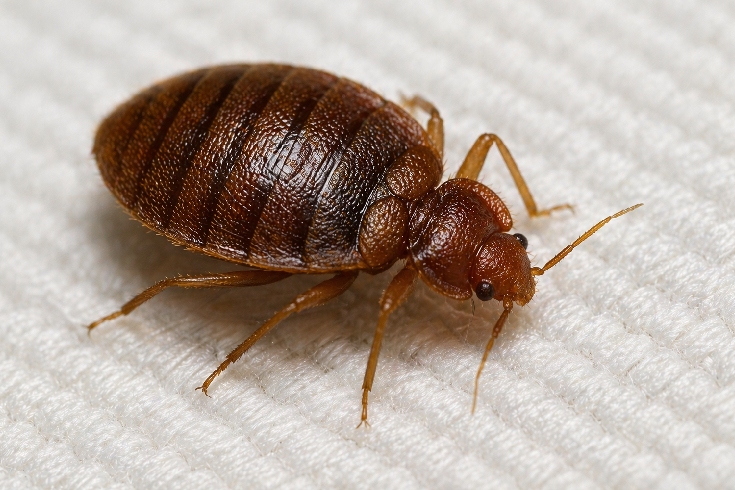
Bed bugs are not a sign of poor hygiene; they are a byproduct of human movement. As a transit and industrial hub, Edmonton sees a steady influx of these pests via hotels, public transport, and the used furniture market. Bed bugs are resilient, capable of surviving for months without a blood meal, and are notorious for their ability to hide in paper-thin crevices, including electrical outlets and picture frames.
Eradication Protocols
DIY attempts at bed bug removal frequently fail because the insects have developed significant resistance to common pyrethroid-based retail sprays. Furthermore, these sprays often act as a repellent, causing the bugs to scatter into neighboring rooms or behind baseboards, making the eventual professional treatment more difficult.
The standard for modern bed bug removal is a dual approach:
- Thermal Remediation: Raising the internal temperature of a room to a lethal level (approximately 50°C) for several hours to ensure that eggs, nymphs, and adults are destroyed.
- Chemical Barriers: Applying long-lasting residuals in areas where the bugs travel to ensure that any surviving individuals are neutralized upon contact.
4. Cockroaches: Managing the Multi-Unit Challenge
The German Cockroach is the most common species in the Edmonton area. They thrive in the high-humidity microclimates found behind refrigerators, under sinks, and inside dishwashers. In multi-unit residential buildings (MURBs), cockroaches can travel between suites via shared plumbing stacks and electrical conduits.
Breaking the Cycle
The primary challenge with cockroaches is their egg case, known as an ootheca. A single ootheca can contain up to 40 eggs, and it is protected from most surface-level pesticides.
- Vacuuming: High-efficiency particulate air (HEPA) vacuums can be used to remove active populations and allergens manually.
- Insect Growth Regulators (IGRs): Professionals use IGRs to mimic juvenile hormones, preventing the cockroaches from molting or reaching reproductive maturity.
- Deep Sanitation: Removing “competitive food sources” is vital. A cockroach can live for weeks on the grease film behind a stove.
5. Wasps: Territorial Management in Late Summer
In Edmonton, Yellowjackets and Bald-faced Hornets are the most frequent causes of summer pest calls. During the spring, queens are focused on building small nests and raising workers. By August, the colony size peaks, and the wasps’ dietary needs shift from proteins to sugars. This is when they become most aggressive toward humans, particularly around trash bins and outdoor dining areas.
Safe Removal and Prevention
A wasp nest attached to a soffit or buried in a lawn is a liability. Wasps release an alarm pheromone when threatened, which can trigger a mass attack.
- Early Detection: Inspect eaves and porch ceilings in May and June when nests are the size of a golf ball and easily managed.
- Professional Extraction: Technicians use specialized protective suits and pressurized dust that penetrate the nest structure, neutralizing the colony instantly without risking stings to the property owner.
- Attractant Reduction: Keep fallen fruit picked up from the lawn and ensure all outdoor waste containers are cleaned and sealed.
The Role of Professional Inspection
While the steps outlined above provide a framework for prevention, a professional inspection offers forensic detail that is difficult to achieve independently. A certified technician understands the local ecology and the specific behavioral patterns of Edmonton pests. They can identify “conducive conditions“—such as a hairline crack in a foundation or a specific type of shrubbery—that attract infestations.
Investing in professional services is about moving from a reactive “see-and-spray” mindset to a proactive management strategy. This not only protects the physical structure of the home or business but also ensures that the environment remains healthy and free of the pathogens that these pests inevitably carry.