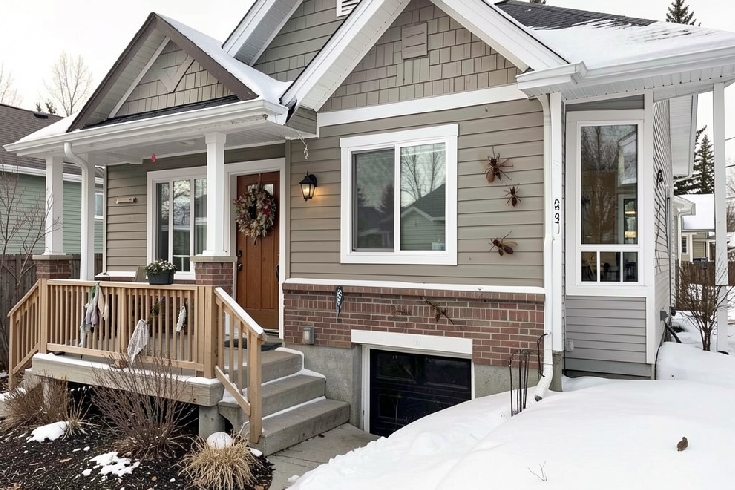
To the average person taking a tour of a potential home in Edmonton, like the high-efficiency furnace or the quartz countertops, it’s the high-value features of a home that steal the attention. It’s not easy to appreciate the effort that went into staging the home. In real estate, a clean home can also mean professional staging that, either accidentally or purposefully, hides a pest infestation. Edmonton homes can also carry the risk of costly biological burdens, regardless of how attractive the high-value features appear to be.
You have to look deeper to find the pest hot spots before the ownership changes. The biological creatures have predictable patterns and they leave traces of themselves no matter how clean the space is after, which can be used to find the areas they frequent most. Knowing the potential problems will determine ease of transition to a new home versus the difficulties and costs of remediation that will have to be dealt with.
Edmonton’s Environment
The city of Edmonton poses a number of problems for property owners. The wildlife and insect patterns of behavior due to the location and extreme environments dictate which climates are pest free and which are not. In comparison to coastal warm climates, the outdoors remain pest free during the warmer months, whereas in Edmonton, the insects and pests are more numerous.
Thermal Gradient and Pest Pressure
During the harsh winters of Northern Alberta when the temperature reaches -30 degrees to -40 degrees, all buildings are turned into potential targets for rodents due to the urban heat island effect. One of the rodent species, mice, are particularly sensitive to heat loss through building envelopes and can sense heat loss through microscopic cracks in building foundations, vent covers, and in caulking.
In Edmonton, there is an increased pressure on all building facades during the freeze-up and pre-snow seasons of the fall. Once a mouse or insect colony invades the insulated cavities of a building, they are extremely unlikely to migrate during the winter months.
Local Species Profile
Even though pests are a global concern, there are only a few pests of concern to homeowners in this area.
- House Mice and Deer Mice: Considered to be a serious problem in the entire Capital Region.
- Carpenter Ants: Unlike most other wood-destroying species, they do not eat wood, but instead, create gallery systems within wood, particularly the decayed wood of structures in older neighborhoods of Edmonton such as Strathcona or Glenora.
- German Cockroaches: One of the most serious pests of modern times, particularly in newer high-rise buildings or older mixed-use buildings commercial-residential buildings.
- Pavement Ants: Considered to be one of the most important pests found during the spring thaw in the sub-slab and basement region of buildings.
1. Small Droppings and Waste Remnants
Biological waste is definitive evidence of pest presence. However, with a recent vacuum, a pile of rodent droppings is unlikely. Look in the “dead zones” — pest evidence areas that are untouched by cleaners.
Finding Evidence of Rodents
Mouse droppings are dark, cylindrical, and about the length of a grain of rice. In staged homes, they can often be seen behind kitchen cabinet kickplates and under the last oven drawer. In homes with basements that have a drop ceiling, there is often a rodent “highway” along the perimeter of the room, and droppings pile up above the drop tiles.
Identifying Cockroach Frass
Cockroach droppings are much smaller than frass from other pests and often look like specks of black pepper, or ground coffee and therefore can be more difficult to locate. While inspecting the kitchen, the most effective location to locate droppings would be on the hinges of the upper cabinets and the motor casing of the back of the fridge, as these areas are warm, and moist. If you see any dark markings or “stains” on the corners of the pantry, this means the area is highly trafficked and colonized by pests.
Identifying Activity Duration
From the droppings, you can also determine whether the situation is current or historical.
- New Evidence: Droppings that are dark and moist, and have a shiny surface, are a clear indication of active infestation.
- Old Evidence: If the droppings are a dusty or brittle grey, this is often the result of a pest population that has been eliminated, but the entry points remain open. Finding a mix of old and new droppings is also indicative of a growing population.
2. Structural Damage and Wood Debris
Pests are constantly modifying their environment. Wood-destroying insects also excavate wood, but in a more organized manner. Rodents are slightly different. Their incisor teeth grow continuously, and they need to gnaw on harder fibrous materials to keep their teeth from overgrowing.
In Alberta, there is a misperception that the presence of subterranean termites poses a considerable risk to homes. In Edmonton, that is not the case. Wood damage is most often caused by Carpenter Ants.
Carpenter Ants do not consume wood, rather they remove it to provide access to their nests. They expel frass which is a mixture of fine sawdust, insect parts, and dirt. If you notice small pile of dust that appear to be wood shavings underneath a window, along a wall, or in the basement, that is a sign of colony living in that structure.
Damage to Wiring and Baseboards
In the utility room and in the vicinity of the electric panel, check the wiring. The insulation around the wires is a nesting material for rodents. Stripped insulation can create a situation that can start a fire. Also check the baseboards and the bottom of the door frames. If there are little holes along the edges and marks that appear to be from rodent chewing, the rodents are creating or enlarging gaps that will make it easier for them to move around the house.
3. “Rub Marks” and Pathways
Rodents have very limited vision, so they heavily rely on their other senses, particularly their whiskers and sense of touch. One behavior that they exhibit is called thigmotaxis. It is their way of describing their tendency to stay close to, and often touch, the solid surfaces around them, such as walls.
Detecting Sebum
As rodents travel, the oily dirt that accumulates on the fur (sebum) creates a dark, greasy mark at the point of contact. This is a “rub mark.” Look for them on the base of boards, the sides of floor vents, and around openings of pipe fittings in the walls.
In uninhabited spaces, other people may disregard these marks as exposure due to contact with sliding furniture. However, thanks to the distinct greasy feel, rub marks are concentrated at the bottom of the wall. If you see these marks at a small hole in the wall, you have found a primary entry and exit point.
Aside from perhaps a detailed analysis, a high-powered UV flashlight can identify the location of pest traffic that is not detectable using traditional means. Rodent urine contains proteins that glow under UV light. By using a black light in a darkened room, a pest scanner can determine all the rodent traffic and pest locations.
4. Secret Nesting Construction
Not only do pests infest a house, but they also construct their own habitats and make nests. They use insulating material such as cotton and other softer fabric products, and construct nests in places that will not be routinely disturbed.
Patterns in Attic Insulation
Most home inspections neglect the attic, but it is the most important area for pest control in an Edmonton home. Mice and squirrels will tunnel through blown-in cellulose or fiberglass batts. Insulation in an attic should be relatively level; if you see “runways”—depressions in the insulation that look like miniature hiking trails—or burrow holes, you are looking at a rodent-infested attic.
Accumulation of Materials
Inspect corners of your basement, inner parts of your electrical sub-panel, and your storage closets, back. Pests shred materials like paper, cardboard, or cloth to manufacture nests. If you see a hoard of shredded materials behind a box or within a drawer, that means the problem has likely been there for a long time without being addressed.
5. Sensory Indicators (Odor and Sound)
Your senses are often more reliable than a visual inspection during staged environments. Sellers can conceal stains, and clean droppings, but the smells and sounds of an infestation are harder to clean.
The Smell Test
Significant pest populations give off a specific enclosed space smell.
- Rodents: Active mouse colonies smell stale and ammonia-like. In the “cold room” or under the kitchen sink, mouse urine rests, and the smell here is very strong.
- Cockroaches: An infestation of cockroaches emits a smell of oily or musty odor. This odor lurks primarily in the kitchen and laundry room.
- Bed Bugs: These are tricky as the actual little bugs are numerous. But the number of bed bugs can irritate a person. It may smell sweet and sickening, like the smell of rotting raspberries or the smell of coriander.
Acoustic Evidence
Imagine that you are touring a house in the early evening or in the early afternoon during a quiet time. Take a moment to be completely quiet. Try to listen near the outside walls or the outside ceiling.
- Scuttling/Scampering: The sound of rodents moving quickly over drywall or through ductwork.
- Faint Clicking: In a very quiet setting, one can sometimes hear a large Carpenter Ant colony, who make a quiet rustling or clicking sound as they move inside the wood.
| Sensory Indicator | Likely Pest | Primary Inspection Location |
|---|---|---|
| Ammonia/Sharp Urine | Mice/Rats | Pantries, under sink cabinets, attic hatch |
| Oily/Musty/Stale | Cockroaches | Kitchen cabinet hinges, behind dishwasher |
| Sweet/Sickly Floral | Bed Bugs | Baseboards near beds, electrical outlets |
| Scratching/Thumping | Squirrels/Rats | Attic, soffits, roofline |
| Scuttling/Squeaking | Mice | Inside wall voids, floor joists |
The Role of Professional Exclusion in Edmonton
A standard home inspection is a generalist overview. While an inspector may note the presence of droppings, they are unlikely to be able to diagnose the extent of the biological pressure on a structure. A specialized pest inspection looks at the process of “exclusion” – the identification and closure of all structural openings that allow pests into the home.
Why Exclusion Matters
In Edmonton, market conditions make Bait and Trap strategies ineffective. Due to extreme winter conditions, more pests will replace those killed and attempt to exploit the gaps. True remediation means finding and closing every gap > the size of a dime (the size a mouse can enter). Permanent remediation includes steel mesh and specialized sealants.
Negotiation and Remediation
Should a pest inspection show signs of a pest problem, it should be seen as a lack of maintenance, rather than an inspection reason to walk away from the deal. This then becomes a negotiating point for a professional cleanout and exclusion to be completed as part of the sale. Licensed professionals must be engaged to perform the exclusion work. They will issue a warranty to ensure the problem does not return during the first winter of your ownership.
Frequently Asked Questions
No, pest inspections of homes are not included in standard pest control services. Most home inspectors follow the pest control services contract and mention the presence of pests only if they see obvious signs. They also do not offer pest control services under their scope of work. This is especially important for older homes and homes located near the River Valley and heavily wooded areas, where the investment in a pest control inspection prior to purchase is beneficial.
In Edmonton, professional treatment and exclusion for a standard detached home range from $300 to $700. This can vary from home to home based on the severity of the clean up required in the attic or crawl space, and the number of entry points to be closed.
Older Edmonton neighborhoods have established tree canopies which create natural habitats for foraging and sheltering pests, like a wildlife buffet. Additionally, the pests can more easily breach older building materials, such as soft wood building soffits, which liner modern pest resistant materials.
Store-bought ant products tend to be more of an irritant for the ants rather than a true insecticide, which can make the ant problem worse by causing the colony to "bud" or fission into several new colonies. Carpenter ant nests are located in treatable wood and require a true insecticide that is transferred by the worker ants to the queen in order to achieve colony elimination.
Prior to moving any furniture, thoroughly deep clean the interiors of the cabinets. Use copper mesh or steel wool in conjunction with silicone caulk to seal gaps around plumbing pipes under sinks. Make certain that the door sweeps on all exterior doors are in complete contact with the threshold; if you can see light under the door, a mouse can get in.