Updated August 2026: refreshed with the latest 2026 rodent-proofing techniques for Edmonton homes.
Rodent-Proofing in 2026: What Works Best in Edmonton
Rodent-proofing in 2026 has moved beyond simple traps and poison. Edmonton pest professionals now combine exclusion work, sealing entry points with durable materials like steel wool and expanding foam, with smart monitoring that detects activity early. Mice can squeeze through gaps the size of a pencil, so thorough exterior inspection and sealing of utility entry points is the foundation of any effective rodent prevention plan.
Seasonal changes matter too: as temperatures drop in fall, rodents seek warm shelter indoors, which is why late summer is the best time to inspect and seal your home. Professional exclusion services offer the most complete protection because they identify entry points homeowners miss, from roof vents to garage door seals to pipe penetrations.
As the leaves fall and the first frost hits the Capital Region, Edmontonians know the drill: switch to winter tyres, check the furnace, and break out the parkas. However, one crucial step is often missed in winter preparation—securing your home against four-legged invaders.
Rodent-proofing isn’t just a suggestion; in Alberta, it’s a necessity. When temperatures plummet, mice and other rodents get desperate. This guide covers everything you need to know to fortify your property against the harsh Alberta winter.
Why Rodents Invade Edmonton Homes in Winter
It isn’t malice; it’s survival. Edmonton winters are unforgiving. While humans have central heating, rodents rely on finding borrowed warmth to survive the season. Your home acts as a beacon of heat and food scents, making it the ultimate target for pests seeking refuge from the snow.
The Impact of Extreme Cold: Understanding Local Rodent Behaviour
In milder climates, rodents might forage outside year-round. However, when Edmonton hits that deep freeze of -30°C or colder, behaviour changes drastically.
Rodents stop exploring vast territories and seek a single, stable environment. Once a mouse finds a warm pocket in your Insulation or a path to your basement, the extreme cold creates a “lock-in” effect. They aren’t leaving; they are moving in for the duration of the winter.
Winter-Active Rodents in Alberta
Knowing your enemy is the first step in defence:
- House Mice & Deer Mice: These are your primary indoor threats. They can squeeze through a hole the size of a dime, are excellent climbers, and actively seek the warmth of your kitchen and attic.
- Voles: Often called “field mice,” these stay active under the snowpack (the subnivean zone). While they rarely enter homes, they wreak havoc on lawns and trees during winter.
- Pocket Gophers: These excavators remain active underground below the frost line. While they rarely breach interior walls, their tunnelling can disturb foundations and patio stones.
Inspecting Your Property: Common Entry Points
To stop them, you have to think like them. You must inspect the exterior of your home for any breach in the perimeter. A mouse can feel warm air currents escaping from your home; these drafts act as a “Welcome” sign.
Vulnerabilities: Older vs. Newer Edmonton Builds
Whether you live in a heritage home in Strathcona or a new build in Windermere, you are at risk, though for different reasons:
- Older Homes: Look for shifting foundations, cracks in brick mortar, and rotted wood around basement window frames. Gaps often form where new additions meet the original structure.
- Newer Builds: Settlement cracks are common in the first few years. Furthermore, verify that vinyl siding corner posts are capped at the bottom; mice often climb these hollow posts to reach the attic.
Utility Lines, HVAC, and Weep Holes
The most common entry points are often artificial. Builders cut holes for gas lines, air conditioning wiring, and hose bibs. If these aren’t sealed tightly, mice will walk right in.
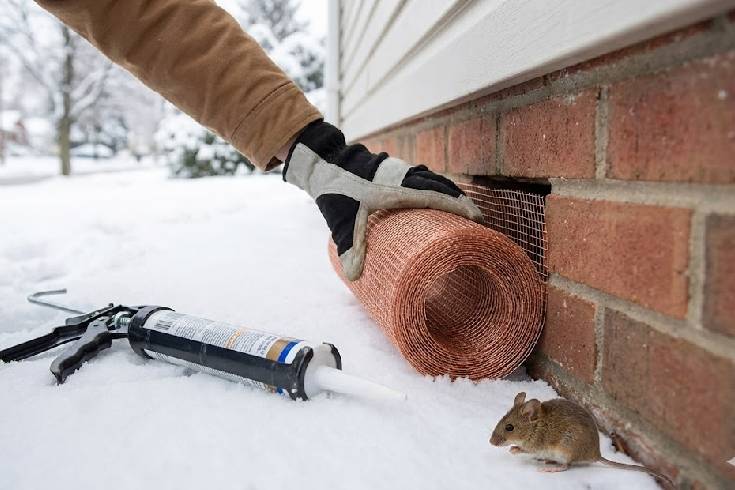
Pay close attention to weep holes in brick veneer. These slots are necessary for ventilation and moisture drainage, but they are often wide enough for mice to enter. Never caulk them shut. Instead, use specialised weep hole covers or copper mesh that allows airflow while blocking pests.
Action Plan: The Rodent-Proofing Checklist
You’ve inspected the house; now it’s time to get to work. Use this checklist to systematise your defence.
1. Perimeter Defence
Start at the foundation and work your way up. Remove vegetation that touches the house, as branches act as bridges. Critically, move firewood piles away from your home’s exterior walls. In Alberta, a woodpile against the house provides a sheltered staging area for mice before they chew their way into your siding.
2. Garage Security
The garage is the most common entry point for mice in Edmonton. The rubber weatherstripping on the bottom of overhead doors becomes brittle and stiff in extreme cold, creating gaps at the corners.
Inspect your garage door seal. If you can see daylight in the corners, a mouse can get in. Replace standard vinyl seals with heavy-duty, cold-weather rubber or brush seals. Inside the garage, keep clutter off the floor to eliminate hiding spots.
3. Interior Winterising
If a scout mouse gets in, don’t give them a reason to stay—store bulk pantry items (flour, rice, pet food) in hard plastic or glass containers. Cardboard offers zero protection. Additionally, use plastic totes for storage rather than cardboard boxes, as mice shred cardboard for nesting material.
Best Materials for the Alberta Climate
Using the wrong material is a waste of time. Standard caulk can crack when temperatures fluctuate between a Chinook and a deep freeze.
Selecting Sealants for -30°C
You need elastomeric sealants that stay flexible. Here is a quick comparison of materials for our climate:
Material Cold Tolerance Rodent Resistance Best Use Case
Silicone Caulk High Low (can be chewed) Sealing small air drafts (combine with mesh)
Polyurethane Very High Medium Exterior masonry and siding gaps
Spray Foam Medium None (easily chewed) Insulation only (MUST be covered)
Hydraulic Cement High High Fixing foundation cracks
Copper Mesh vs. Steel Wool
Mice can chew through wood, plastic, and even cured spray foam. To stop them, you need metal.
- Copper mesh* is the gold standard for Edmonton homes. Unlike steel wool, copper will not rust when exposed to melting snow. Stuff copper mesh tightly into cracks or around pipes, and then seal it in place with a high-quality outdoor sealant to create an impassable physical barrier.
Comprehensive Pest Prevention Strategies
Winter pest control is about looking at the big picture. When you seal your home against the cold and rodents, you create a multi-pest barrier.
Effective Control Tactics
If you suspect you already have guests, exclusion must be paired with trapping. Snap traps are effective when placed perpendicular to walls where mice travel.
Avoid relying solely on poison bait indoors during winter. If a mouse consumes bait and dies inside your walls, the smell will be trapped with you for months due to poor ventilation.
Preventing Secondary Infestations (Bed Bugs & Parasites)
Sealing cracks and crevices does more than stop mice; it creates a tighter building envelope. Rodents can act as transport for parasites, introducing secondary infestations into your home.
By excluding rodents, you reduce these risks. Furthermore, sealing baseboards and wall voids helps contain other difficult pests. If you are dealing with hitchhikers like bed bugs, reducing pathways for movement between rooms is a key part of control.
Preparing for the Thaw: Stopping Ants
The work you do in November pays off in April. The same tiny cracks in your foundation that let heat out and mice in are the highways for insects once the snow melts.
Carpenter ants and pavement ants will exploit these gaps in the spring. By sealing your home now, you are proactively handling future infestations. Learn how seasonal sealing prevents spring ant issues before they start.
When to Hire Professionals
DIY efforts are excellent for maintenance, but sometimes the infestation is established, or the entry points are hard to find.
Professional pest control technicians in Edmonton understand local architecture. They know exactly where to look on a split-level versus a bungalow. Pros use commercial-grade materials not available at the hardware store. More importantly, professional exclusion usually comes with a warranty. It shifts the burden of crawling through a freezing attic from your shoulders to an expert’s, ensuring the job is done right the first time.
FAQ'S
Use copper mesh sealed with cold-resistant polyurethane caulk, as mice cannot chew the metal and the sealant won't crack in -30°C weather.
Poison can cause rodents to die inside inaccessible walls, trapping the decomposition odour inside your home for the entire season.
Extreme cold causes standard vinyl door seals to become brittle and shrink, creating gaps at the bottom corners that mice easily slip through.
Conclusion
Edmonton winters are harsh enough without hearing the pitter-patter of tiny feet in your ceiling. By understanding why rodents want in and systematically sealing your home with cold-resistant materials, you can ensure a cosy, pest-free season.
Whether you choose to tackle the project yourself with copper mesh and caulk or call in the professionals, the time to act is before the deep snow settles. Secure your perimeter, protect your pantry, and stay warm, Edmonton!